Introduction
For centuries, trust in expertise was rooted in credentials, institutions, and professional hierarchies. Doctors, scientists, engineers, and scholars gained authority through formal education, peer review, and institutional endorsement. Technology has fundamentally altered this arrangement, reshaping not only who is considered an expert but also how trust is established and maintained.
In a digitally connected world, expertise now competes for attention in open networks where credibility is continuously tested rather than automatically granted.
The Shift From Institutional Authority to Digital Validation
Traditional expertise relied heavily on centralized institutions such as universities, governments, and professional bodies. These entities served as gatekeepers, filtering information before it reached the public.
Technology has decentralized this process by enabling:
-
Instant access to knowledge across global platforms
-
Public evaluation of experts through comments, ratings, and shares
-
Alternative voices to gain influence without institutional backing
As a result, trust increasingly emerges from visibility and engagement rather than formal authority alone.
Algorithms as Invisible Trust Brokers
Algorithms now play a critical role in shaping which experts people encounter. Search engines, social platforms, and recommendation systems decide what information rises to prominence.
This creates new trust dynamics:
-
Popularity can be mistaken for credibility
-
Repetition can reinforce perceived truth
-
Complex expert insights may be overshadowed by simplified narratives
Trust becomes algorithmically mediated, often without users realizing how much influence these systems exert.
Artificial Intelligence and the Automation of Expertise
AI tools are rapidly becoming trusted sources of advice in healthcare, finance, education, and law. Many users treat algorithmic outputs as objective or authoritative, even when the underlying logic is opaque.
This evolution shifts trust in several ways:
-
From human judgment to system accuracy
-
From explanation to performance-based confidence
-
From personal accountability to technical reliability
While AI enhances efficiency, it also raises concerns about bias, overdependence, and the erosion of human oversight.
The Democratization and Fragmentation of Knowledge
Technology has lowered barriers to learning and participation. Online courses, open-access research, and collaborative platforms allow more people to engage with expert-level material.
However, this openness also leads to:
-
Blurred lines between expert insight and opinion
-
Increased difficulty distinguishing evidence from anecdote
-
Competing claims of authority across digital spaces
Trust in expertise becomes contextual, varying by platform, topic, and audience.
Why Transparency Has Become Essential
In the digital environment, expertise is trusted not only for accuracy but also for openness. People are more likely to trust experts who explain uncertainty and share their reasoning process.
Trusted experts today often demonstrate:
-
Willingness to clarify assumptions
-
Openness about limitations and risks
-
Consistent engagement with public questions
Technology rewards those who communicate clearly and authentically, reshaping expectations around professional authority.
Redefining Trust in a Tech-Driven Society
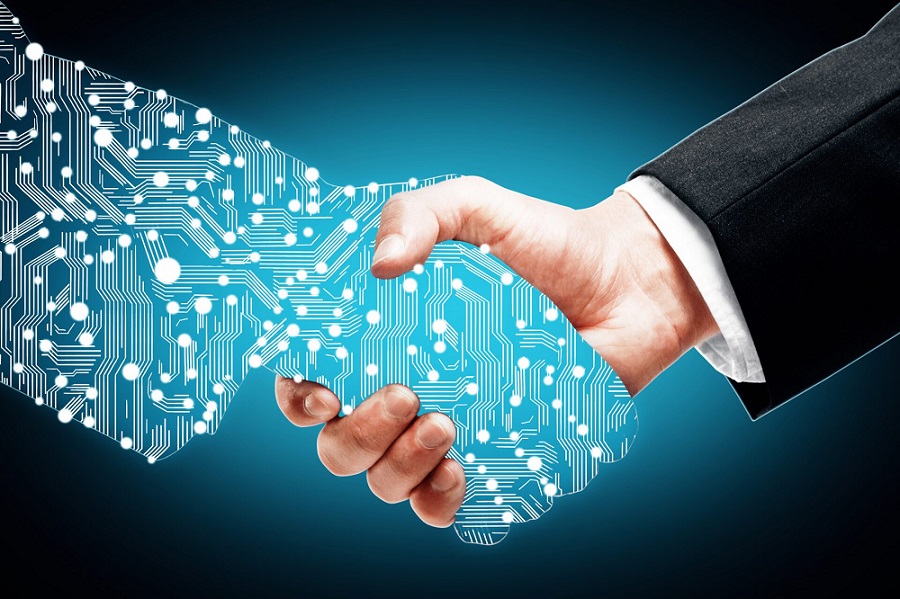
Trust in expertise is not disappearing; it is evolving. Technology demands a more participatory relationship between experts and the public.
Key changes include:
-
From unquestioned authority to earned trust
-
From static credentials to continuous validation
-
From control of knowledge to guidance and interpretation
Experts who adapt to these expectations can strengthen their credibility, while those who resist transparency may find trust increasingly fragile.
Frequently Asked Questions (FAQs)
1. How has technology changed who we trust as experts?
Technology has expanded the definition of expertise, allowing credibility to emerge from digital visibility, communication skills, and perceived reliability.
2. Are traditional experts losing relevance?
No, but they must adapt by engaging more openly and transparently with digital audiences.
3. Why do algorithms influence trust so strongly?
Algorithms control visibility, shaping what people repeatedly see and come to accept as authoritative.
4. Is AI more trustworthy than human experts?
AI can be highly accurate in specific tasks, but it lacks ethical judgment and contextual understanding.
5. How can people evaluate expertise online?
By examining evidence, transparency, consistency, and the expert’s willingness to address uncertainty.
6. Does democratized knowledge weaken expertise?
It broadens access but also increases the challenge of distinguishing validated knowledge from unsupported claims.
7. Can trust in expertise be strengthened through technology?
Yes, when technology is used to enhance transparency, accountability, and meaningful dialogue between experts and the public.